Moodboard
The Ask
Create a professional physical mood board that could be used to present and idea for a clothing line.
Skills
-
Gathered inspiration from fashion trends, cultural references, and design elements to build a strong creative direction.
-
Identified key colors from research images and created a cohesive palette to guide.
-
Arranged images, textures, and swatches in a balanced, visually appealing way that clearly communicates the concept.
-
Chose fabric samples, paper textures, and physical elements that reflect the clothing line’s aesthetic and feel.
-
Selected and edited references to ensure each image or element contributes purposefully to the overall design vision.
-
Crafted a clear narrative that explains the concept, inspiration, and mood through visual cues.
Verdant Origins
A mood board rooted in lush greens, forest textures, and organic shapes, capturing the calming strength and timeless beauty of nature as the foundation for the clothing line.
To begin the creation of my nature-inspired mood board, I started by collecting visual references on Pinterest. I searched for imagery that reflected the exact feeling I wanted the clothing line to evoke—lush green tones, forest textures, mossy surfaces, botanical details, and natural lighting. I curated a large collection of photos, saving only the ones that aligned with the mood, color story, and overall aesthetic direction. This allowed me to build a strong visual library before I moved into the layout phase.
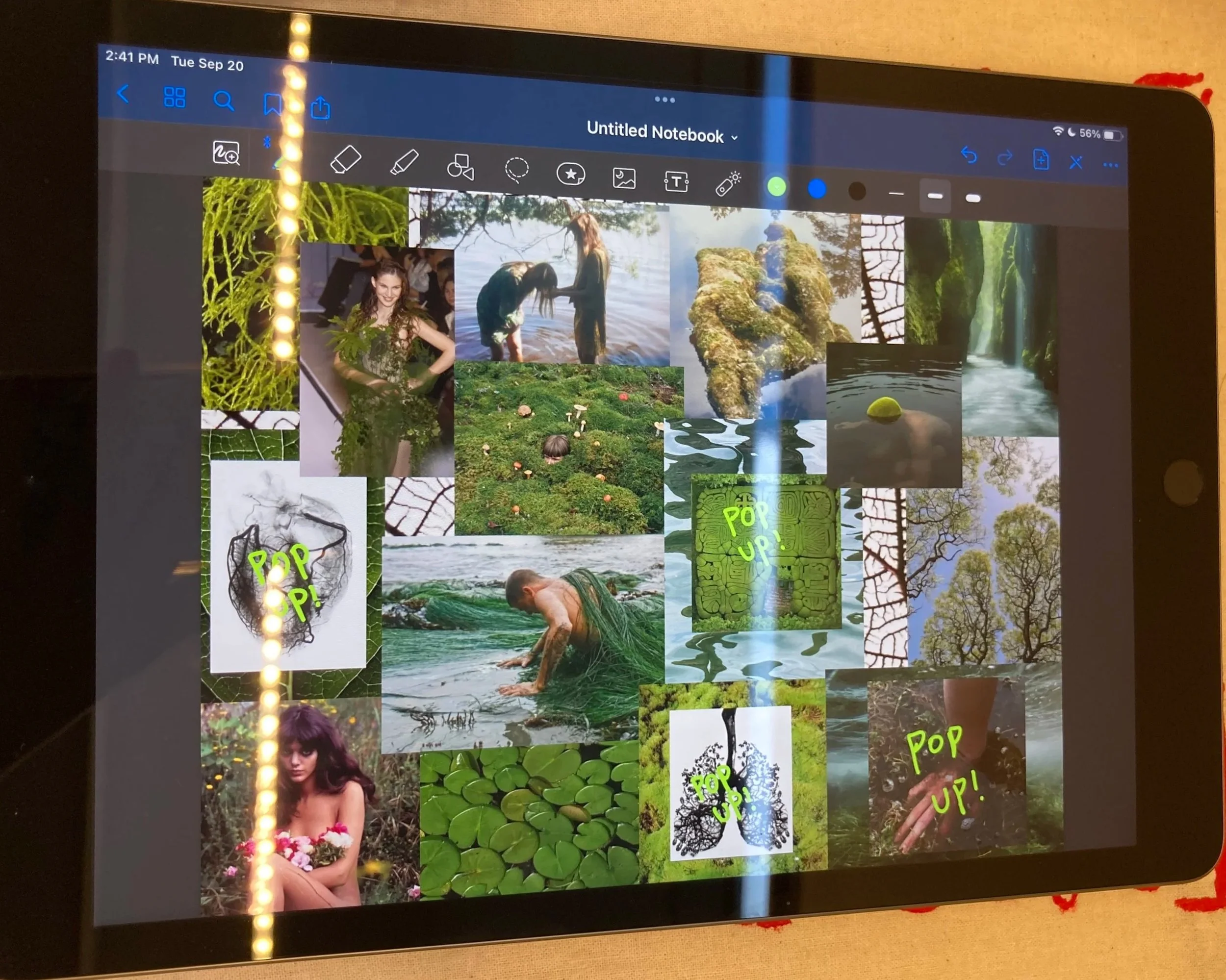
Once I had gathered all the images, I transitioned to my iPad and used it as a digital planning tool. I created a rough layout sketch where I experimented with placement, scale, and flow. This step helped me determine which images should be focal points, which should be secondary, and how the eye should move across the board. I played with layering, spacing, and grouping sections by theme—such as color, texture, and silhouette inspiration. The iPad allowed me to quickly rearrange elements and visualize the board before committing to a final physical layout.
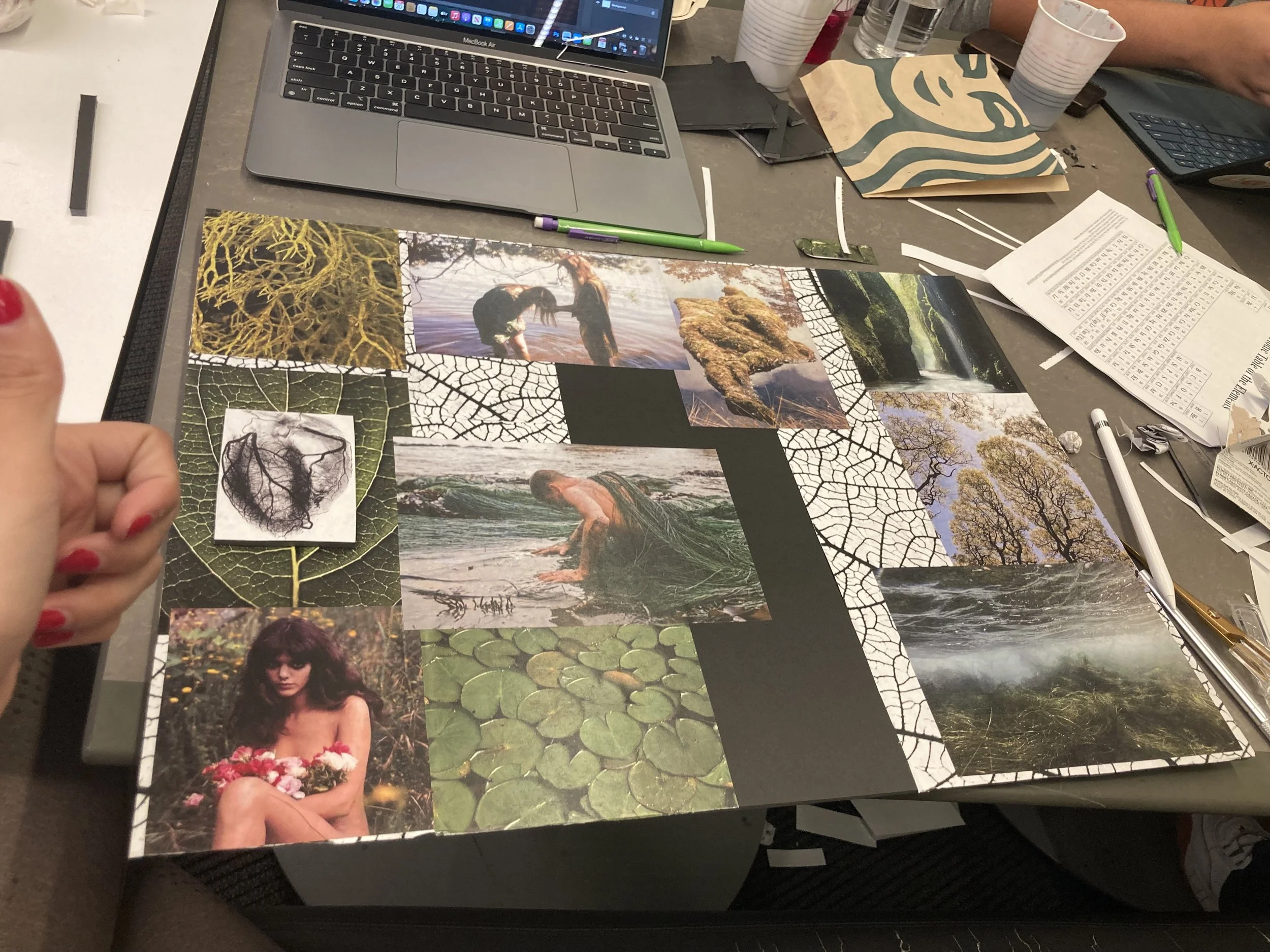
After finalizing the digital mock-up, I printed all the images in various sizes to create depth and variation. I carefully trimmed each picture by hand, taking time to clean the edges and maintain a professional finish. I then arranged the cut-outs on a large foam board, referencing my iPad layout as a guide but also allowing room for creative adjustments as the board came to life. Once everything felt balanced and visually cohesive, I glued each piece into place, ensuring the composition felt intentional and harmonious.
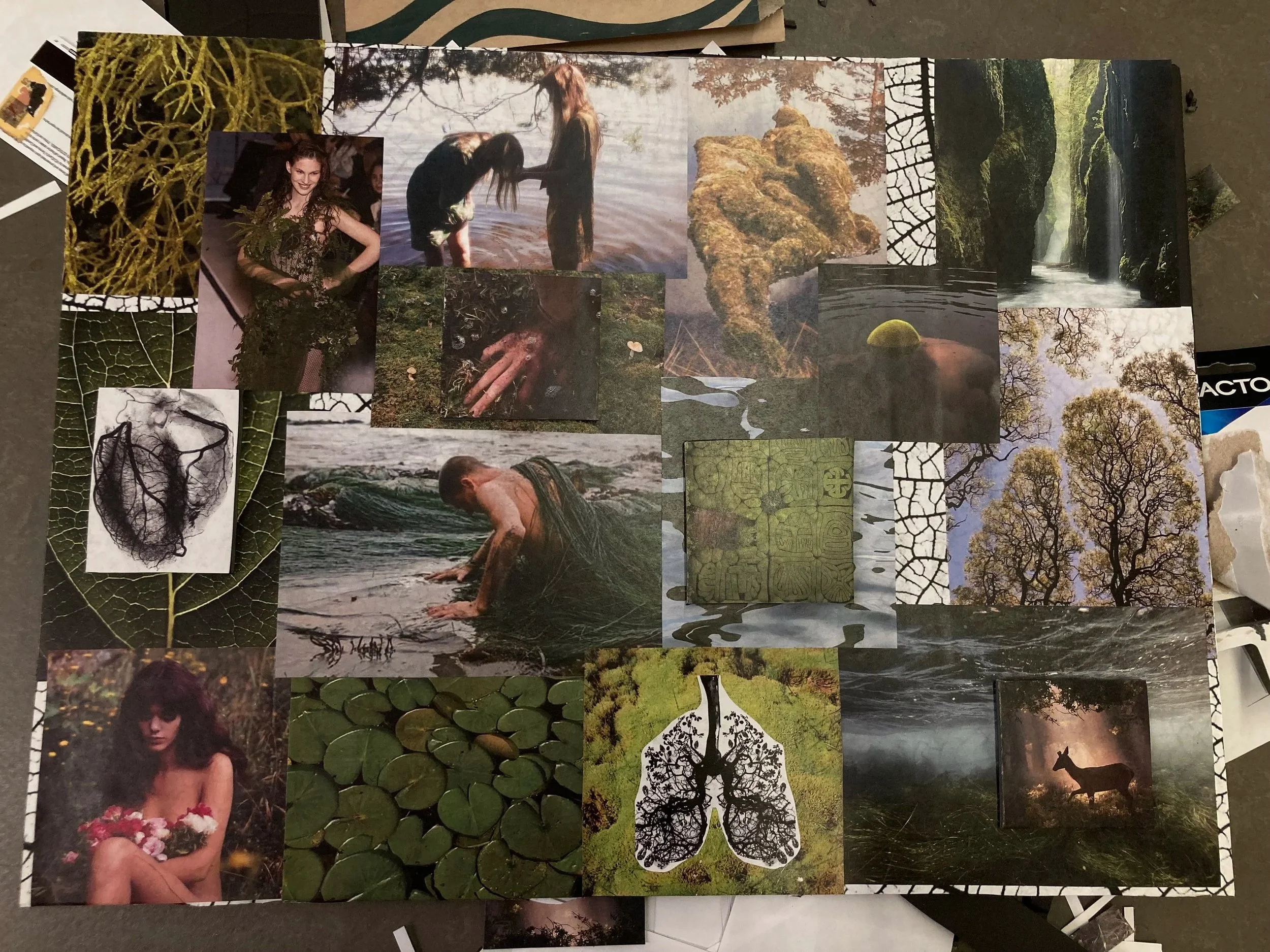
To elevate the presentation even further, I added dimensional elements. Select images and sections were mounted on raised foam pieces, creating pop-up layers that lifted parts of the mood board off the surface. This added depth, texture, and a dynamic, multi-level effect that made the board more engaging and visually rich. The raised sections also helped highlight the most important elements of the concept, making them stand out as key drivers of the clothing line’s direction.
Key Takeaway
-
Using Pinterest allowed for deep exploration of forest-inspired imagery, ensuring every visual element aligned with the mood, color palette, and aesthetic direction of the clothing line.
-
Mapping out the design on the iPad helped refine composition, scale, and visual flow, resulting in a more intentional and cohesive final mood board.
-
Carefully cutting, arranging, and gluing images onto a foam board demonstrated attention to detail and produced a polished, professional look.
-
Incorporating raised, pop-up sections created depth and visual interest, making key inspirations stand out and enhancing the overall storytelling of the concept.
Full Project
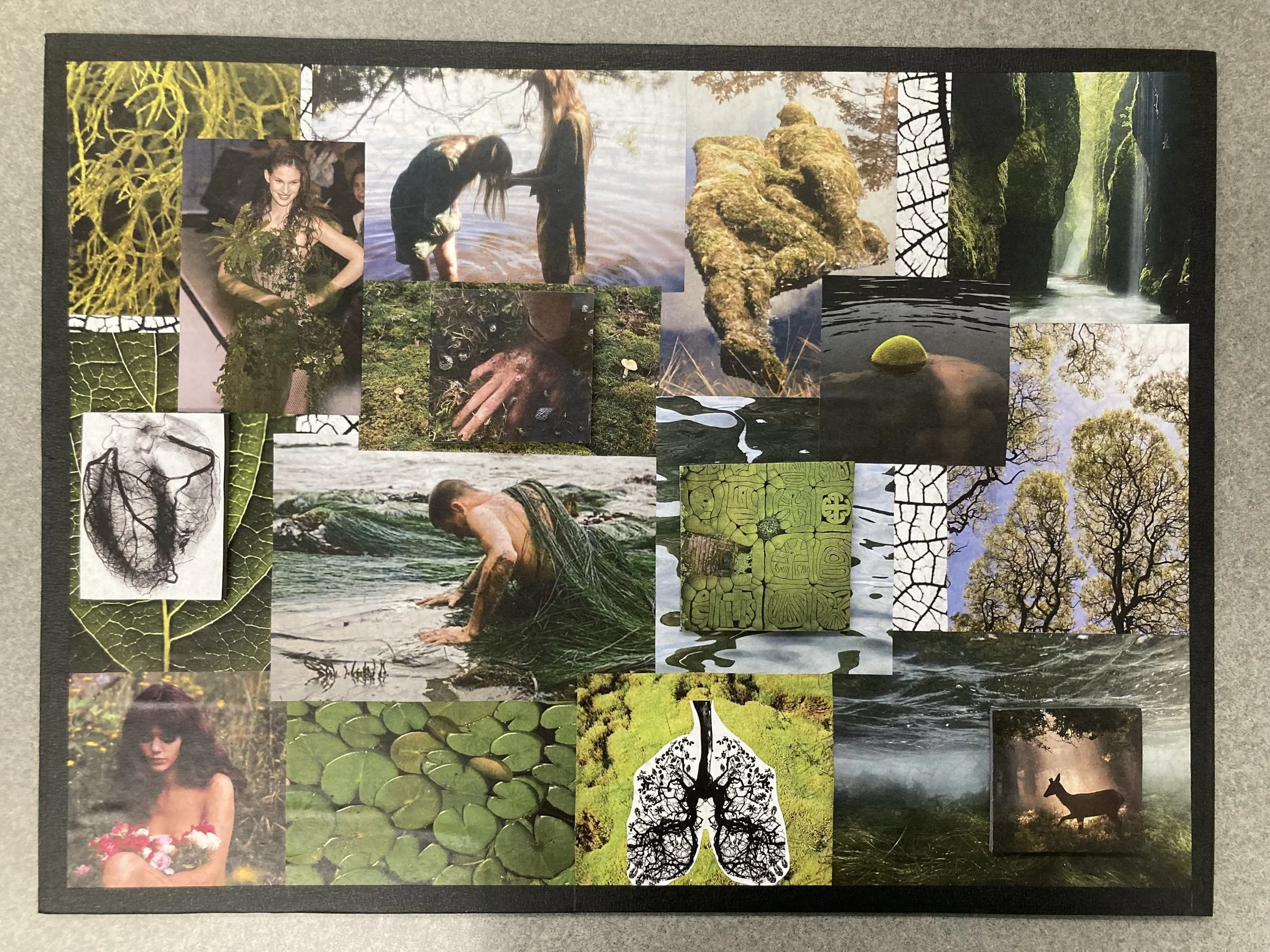
From the forest to the board, vision becomes reality.